
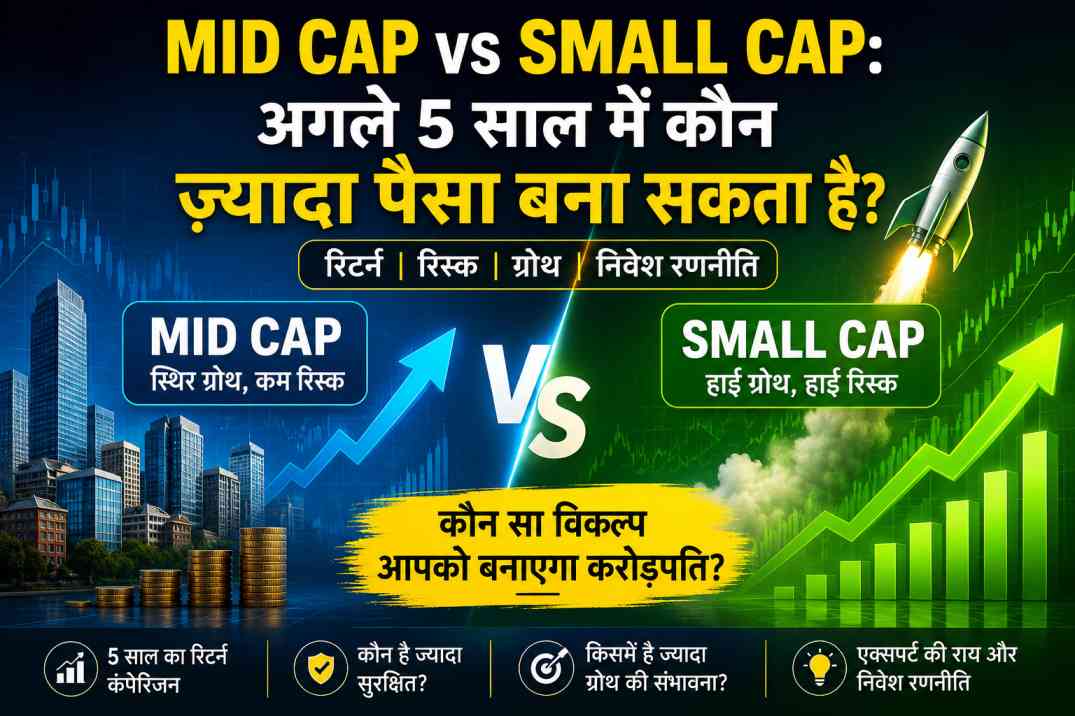
India के investing community में एक debate हमेशा चलती रहती है — Mid Cap या Small Cap? दोनों ने historically Nifty 50 को beat किया है। दोनों में high return potential है। लेकिन दोनों में risk भी काफी ज़्यादा है।
आने वाले वर्षों की बात करें तो — 2026 से 2030 तक — कौन ज़्यादा return दे सकता है? और ज़्यादा important सवाल — कौन आपके लिए सही है?
पहले Basics — Mid Cap और Small Cap क्या है?
SEBI की definition के अनुसार:
- Large Cap: Market capitalization में top 100 companies
- Mid Cap: 101 से 250 रैंक की companies
- Small Cap: 251 से आगे की सभी companies
Nifty Midcap 150 Index में rank 101-250 की companies हैं। इसमें Zomato, Persistent Systems, Voltas, Tata Communications जैसी companies हैं — established but growing
Nifty Smallcap 250 Index में rank 251-500 की companies हैं। यहाँ ज़्यादा unknown, emerging companies हैं — high potential but high risk
Historical Returns — Data पहले
10 साल का CAGR (2015-2025):
Nifty 50: 13.2%। Nifty Midcap 150: 18.1%। Nifty Smallcap 250: 16.8%।
Interesting finding: 10 साल में Midcap ने Small Cap को beat किया। यह counterintuitive लगता है — लेकिन कारण है 2018-2020 का painful small cap bear market
5 साल का CAGR (2020-2025):
Nifty 50: 16.5%। Nifty Midcap 150: 24.8%। Nifty Smallcap 250: 28.3%
5 साल में Small Cap आगे। इसका कारण था 2020-21 का aggressive small cap rally
Pattern क्या है?
Small Cap boom-bust cycle में operate करता है। कुछ सालों में 40-50%+ gain, कुछ सालों में -25 to -35% loss। Net result 10 साल में Midcap के comparable या कम।
Midcap ज़्यादा consistent है। Highs कम extreme, lows भी कम extreme
2026-2030 का Outlook — क्या होगा?
Macroeconomic Context
India 2025-2030 में massive growth phase में है। Manufacturing expansion, infrastructure investment, digital economy, consumption growth — यह सब Mid और Small Cap को directly benefit करते हैं।
Large caps primarily exporters और established businesses हैं। Mid और Small caps primarily domestic India story के players हैं।
India की domestic consumption GDP 2030 तक $4 trillion+ होगी। यह Mid और Small Cap companies की earnings को fuel करेगा।
Mid Cap के लिए Specific Tailwinds
Midcap 150 में वे companies हैं जो large cap बनने की कगार पर हैं। हर साल कुछ Midcap companies Nifty 50 में enter करती हैं — जैसे हाल के सालों में Zomato और कुछ IT companies।
यह “graduation effect” Midcap investors के लिए value unlock करता है। आप early stage में buy करते हो, company large cap में graduate होती है, price बढ़ती है।
Manufacturing capex cycle Midcap heavy है। L&T, BHEL, Thermax जैसी engineering companies Midcap में हैं। Government ₹11 lakh crore capex का direct beneficiary
Small Cap के लिए Specific Tailwinds
Small Cap में India’s next generation of companies हैं। AI startups, specialty chemicals, niche manufacturers, emerging fintech।
अगर India manufacturing hub बनता है — जो होने के clear signs हैं — तो small ancillary companies explosive growth दिखाएंगी।
Small Cap में information asymmetry ज़्यादा है — analyst coverage कम है। Retail investor अगर research करे तो genuine alpha possible है।
Valuation — 2026 में Red Flag
यह 2025 की सबसे important consideration है।
Current PE Ratios:
Nifty 50: 23x (long-term avg 22x — fair)। Nifty Midcap 150: 28x (long-term avg 22x — 27% premium)। Nifty Smallcap 250: 37x (long-term avg 25x — 48% premium)।
Small Cap 2025 में historically expensive valuation पर है। 48% premium to historical average
इसका मतलब है:
अगर Small Cap historical average PE पर revert करे: यानी 37x से 25x पर आए — यह 32% de-rating होगी। एक साल में 10% earnings growth के बावजूद price flat या down रह सकती है।
Midcap का 27% premium ज़्यादा manageable है — और India की strong earnings growth इसे justify कर सकती है।
Crash में Performance — सबसे Important Test
यह section उन लोगों के लिए especially important है जो 5 साल के horizon की बात करते हैं। 5 साल में एक बड़ा crash highly probable है।
2008 Financial Crisis:
Nifty 50: -60%। Midcap: -72%। Smallcap: -73%। Recovery time: Nifty 50 — 2.5 साल। Midcap — 3 साल। Smallcap — 4-5 साल।
2020 COVID Crash:
Nifty 50: -34%। Midcap: -52%। Smallcap: -60%। Recovery time: Nifty 50 — 5 months! Midcap — 12-18 months। Smallcap — 24-30 months
2022 Correction:
Nifty 50: -17%। Midcap: -25%। Smallcap: -35%
Pattern crystal clear है: Small Cap हर crash में ज़्यादा गिरता है और ज़्यादा समय लगता है recover होने में।
5 साल के horizon में अगर crash आए और आपकी Small Cap investment -60% हो जाए — क्या आप hold कर पाएंगे? यह question seriously answer करना ज़रूरी है।
Liquidity Risk — Small Cap का Hidden Problem
Small Cap ETF और Small Cap mutual funds में एक specific risk है जो Mid Cap में कम है: Liquidity risk
Small Cap stocks का daily trading volume कम होता है। जब बड़े mutual funds या ETFs को exit करना हो — या जब redemption pressure हो — तो buyer नहीं मिलते।
2018-2020 में SEBI के re-categorization rules के बाद कई small cap funds को forced selling करनी पड़ी — illiquid stocks में buyers नहीं थे, prices crash हुए।
ETF route में यह थोड़ा better है क्योंकि Nifty Smallcap 250 ETF में top 250 companies हैं — reasonable liquidity। लेकिन individual small cap stocks में यह risk बहुत real है।
Corporate Governance Risk
यह India-specific factor है जो often ignore किया जाता है।
Small Cap companies में corporate governance issues ज़्यादा होते हैं। Promoter manipulation, related party transactions, accounting irregularities — यह predominantly small cap space में होता है।
Midcap में companies established हैं, analyst coverage है, SEBI की नज़र है। Governance better है।
Nifty Smallcap 250 ETF में top 250 companies हैं — इसमें भी कुछ companies problematic रह सकती हैं। Index ETF में diversity है इसलिए एक company का fraud impact diluted होता है। लेकिन risk zero नहीं है।
15 Factor Score Card — Mid Cap जीता
जब हम 15 factors पर systematically compare करते हैं:
Mid Cap जीता 9 factors में: 10yr CAGR, Max drawdown (less), Recovery speed, Liquidity, Volatility, Valuation, Suitable horizon, Beginner suitability, Expense ratio, Corporate governance risk।
Small Cap जीता 6 factors में: 5yr CAGR, Future return potential, Crash buying opportunity, SIP suitability (long term)।
Overall score: Mid Cap 9/15, Small Cap 6/15
लेकिन — यह numbers-based comparison है। The real winner depends on individual risk tolerance और time horizon.
किसके लिए क्या?
Mid Cap ETF चुनें अगर:
Investment horizon 7-10 साल है। आप new investor हैं। Crash में -50% देखकर घबरा जाते हैं। Consistent, reliable growth चाहते हैं। 2025 में lumpsum invest करना चाहते हैं।
Best option: Nippon India ETF Nifty Midcap 150 (NSE: MIDCAP150)
Small Cap ETF चुनें अगर:
Investment horizon 10+ साल है। आपने पहले crash देखा है और hold किया है। High risk tolerance है — -60% drawdown psychologically handle कर सकते हैं। Crash में SIP बढ़ाने की financial और emotional capacity है। Portfolio का यह satellite portion (10-15%) है।
Best option: Nippon India Nifty Smallcap 250 Index Fund
दोनों का Combination (Most Recommended):
Nifty 500 ETF 40% (automatically mid+small exposure है) + Nifty Midcap 150 ETF 10% (extra mid cap tilt) + Nifty Smallcap 250 Fund 5% (small satellite)
यह approach India की full growth story capture करती है बिना excessive concentration के।
2026 में Specific Advice
Small Cap में Lumpsum: Avoid। PE 37x पर है। Valuation risk high है। अगर invest करना है तो STP route लें।
Midcap में Lumpsum: Cautious। 28x PE reasonable है India’s growth के context में। STP safer है।
SIP दोनों में: जारी रखें या शुरू करें। DCA से valuation risk automatic handle होती है।
Crash आए तो: दोनों में SIP बढ़ाएं। Especially Small Cap में — क्योंकि वहाँ सबसे ज़्यादा discount मिलेगा और long term में सबसे ज़्यादा recovery return
Realistic Scenario Analysis
Bull Case (India $5.5T GDP by 2030):
Midcap 5yr CAGR: 20-22%। Smallcap 5yr CAGR: 24-28%। ₹10,000/माह SIP का corpus: Midcap ₹10-11 लाख। Smallcap ₹12-14 लाख।
Base Case (India 6.5% GDP growth):
Midcap 5yr CAGR: 15-17%। Smallcap 5yr CAGR: 16-20%। Corpus: Midcap ₹9-10 लाख। Smallcap ₹10-11 लाख।
Bear Case (Global recession, 2026-27):
Midcap 5yr CAGR: 8-10%। Smallcap 5yr CAGR: 5-8%। Corpus: Midcap ₹8 लाख। Smallcap ₹7.5-8 लाख।
Bear case में Midcap Small Cap से better है — कम गिरना और faster recovery
निष्कर्ष — Final Verdict
कौन ज़्यादा पैसा बनाएगा?
Raw return potential में: Small Cap थोड़ा आगे — अगर bull market रहे।
Risk-adjusted return में: Mid Cap बेहतर — consistent performance, lower drawdown
2026 की valuation के context में: Mid Cap ज़्यादा reasonable है। Small Cap overvalued दिख रहा है।
Long term (10+ साल) में: दोनों excellent। Small Cap थोड़ा आगे historically
Practical advice: Portfolio में Nifty 50/500 ETF core (60-70%) रखें। Mid Cap 15%, Small Cap 5-10% satellite में। यह India की growth story को capture करता है बिना excessive risk के।
और सबसे important — जो भी चुनें, SIP discipline बनाए रखें। Mid Cap या Small Cap — दोनों को compound interest और patience की ज़रूरत है। 5 साल में नहीं, 10-15 साल में असली जादू दिखता है।
“In the short run, the market is a voting machine. In the long run, it is a weighing machine.” — Benjamin Graham
Short term में Mid Cap और Small Cap दोनों volatile हैं। Long term में दोनों India’s growth को reflect करेंगे। Patient रहें।
Disclaimer: यह article केवल educational purpose के लिए है। Historical returns future performance की guarantee नहीं हैं। Mid Cap और Small Cap investments में substantial market risk है। Valuations बदलती रहती हैं। निवेश से पहले SEBI registered financial advisor से सलाह लें।
Read Also: क्यों Salary बढ़ने के बाद भी लोग अमीर नहीं बनते?
Read Also: क्या Diversification आपको गरीब बना रहा है?
Read Also: क्या Small Cap में पैसा लगाना अब पहले जितना फायदेमंद नहीं रहा?

नमस्कार दोस्तों, मेरा नाम वरुण सिंह है, मैं अपने खाली समय में Youtube Channel पर फाइनेंस संबंधी वीडियो अपलोड करता हूं साथ ही ब्लॉगिंग भी कर रहा हूं। हमारी कोशिश है की हम अपने पाठकों के लिए फाइनेंस सम्बंधित विषयों पर उच्च गुणवत्ता से युक्त आर्टिकल प्रकाशित करें।