
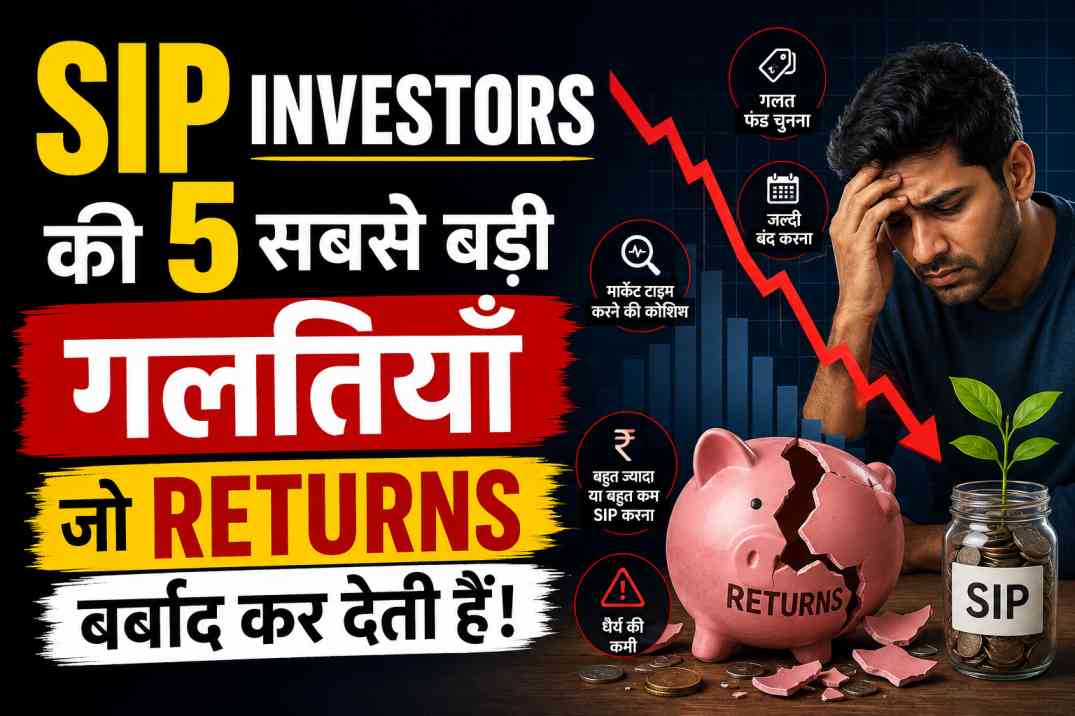
SIP शुरू करना आसान है। SIP को सही तरीके से करना — यह ज़्यादातर लोग नहीं जानते।
India में 10 करोड़+ SIP accounts हैं। लेकिन इनमें से ज़्यादातर investors ऐसी गलतियाँ करते हैं जो उनके 20 साल के corpus को ₹1 करोड़ से घटाकर ₹50 लाख कर देती हैं।
₹50 लाख का फर्क। Same SIP amount। Same time period। सिर्फ 5 गलतियों की वजह से।
यह article उन 5 गलतियों को identify करती है, उनका actual cost calculate करती है, और exact fix बताती है।
गलती #1 — Regular Plan में SIP: सबसे Expensive Silent Mistake
यह India की सबसे widespread और सबसे silent wealth destroyer है।
जब आप किसी bank, insurance agent, या distributor के through mutual fund खरीदते हैं — वो आपको Regular Plan देता है। Direct Plan नहीं।
फर्क यह है:
Direct Plan: AMC directly आपको बेचती है। कोई distributor commission नहीं। Expense ratio: 0.10-0.50%
Regular Plan: Distributor के through। उनकी commission expense ratio में जुड़ती है। Expense ratio: 1.0-2.5%
यह 1-1.5% का difference छोटा लगता है। लेकिन compound interest की वजह से 20 साल में यह devastating होता है।
Numbers देखें:
₹10,000 मासिक SIP, 14% gross return, 20 साल:
Direct Plan (0.10% expense): Net return 13.9%। Corpus: ₹1.31 करोड़। Regular Plan (1.8% expense): Net return 12.2%। Corpus: ₹1.08 करोड़।
फर्क: ₹23 लाख। सिर्फ distributor commission की वजह से।
ज़्यादा SIP amount पर यह फर्क और बड़ा होता है। ₹30,000/माह SIP पर 20 साल में ₹70+ लाख का difference
Distributor का Incentive Problem
Bank relationship manager, LIC agent, और mutual fund distributor — सब Regular Plan sell करने के लिए commission पाते हैं। यह commission आपकी SIP के expense ratio में embedded होती है।
उनका incentive है Regular Plan बेचना। आपका incentive है Direct Plan लेना।
Fix: आज ही करें
MFCentral.in पर जाएं। यह AMFI का official platform है। यहाँ आप सभी Regular Plan units को Direct Plan में switch कर सकते हैं।
Process: Login with PAN + Aadhaar → My Portfolio → Switch Regular to Direct
एक बार की process। कोई exit load नहीं अगर 1 साल से ज़्यादा हो। Tax implication थोड़ी है (capital gains tax), लेकिन long term में यह switch हमेशा worthwhile है।
भविष्य में Groww, Zerodha Coin, या AMC website पर directly invest करें। कभी bank के through mutual fund मत लें।
गलती #2 — Crash में SIP बंद करना: सबसे Costly Emotional Decision
यह India के SIP investors की दूसरी सबसे बड़ी mistake है।
Market 30-40% गिरता है। Portfolio लाल हो जाता है। WhatsApp पर “market डूब रहा है” के messages आते हैं। और investors SIP रोक देते हैं।
यह गलत क्यों है?
SIP की ताकत ही यह है कि crash में ज़्यादा units मिलती हैं। जब NAV ₹100 से गिरकर ₹60 हो जाती है, तो आपकी ₹10,000 SIP में 100 units की जगह 167 units मिलती हैं।
जब market recover करता है और NAV ₹130 हो जाती है: SIP जारी रखने वाला: 167 units × ₹130 = ₹21,710। SIP बंद करने वाला: 0 extra units = ₹0 gain।
वो 67 extra units crash में मिली थीं — और recovery में ₹8,710 बनीं। एक महीने में।
2020 COVID Crash का Data
March 2020 में Sensex -38%। AMFI data के अनुसार उस period में 35% SIP investors ने SIP रोकी।
जो रुके — उन्हें October 2020 तक 80%+ recovery मिली। जो निकले — उन्होंने वो recovery miss की और फिर ऊपर वापस आए।
20 साल में Cost
₹10,000 SIP, 12% CAGR: Continuous SIP: ₹99.9 लाख। 2 major crashes में total 12 months SIP pause: ₹88-92 लाख। फर्क: ₹8-12 लाख।
Fix: Automation
Auto-debit set करें और भूल जाएं। SIP की bank mandate ऐसी बनाएं कि manually cancel करना पड़े — यह friction आपको emotional decisions से बचाता है।
Phone में mutual fund app का notification off करें। Daily portfolio देखना बंद करें।
Emergency fund मज़बूत रखें — ताकि crash में SIP बंद करने की financial ज़रूरत न पड़े।
गलती #3 — Fund Switch करते रहना: Churn का Compound Cost
“यह fund 2023 में top performer था, इसमें switch करते हैं।”
यह सोच India के retail investors में epidemic है।
क्यों होता है यह?
Recency bias — जो हाल में अच्छा perform किया वो आगे भी करेगा। यह false belief है।
SPIVA India data बताता है: हर साल का top performer अगले साल average या below average रहता है। Consistent outperformance extremely rare है।
Switching का Hidden Cost
Exit Load: ज़्यादातर equity funds में 1 साल से पहले exit करने पर 1% exit load है।
Tax: अगर fund में gain है और 1 साल से पहले निकाला — 20% STCG। 1 साल बाद निकाला — 12.5% LTCG (₹1.25L से ऊपर)।
Compound Chain Break: जो corpus था वो exit करने के बाद नए fund में जाता है। नए fund में fresh units। पुराना compounding benefit reset
Tracking Complexity: 5 funds manage करना आसान है। अगर हर 2 साल में switch करते रहे तो 10 साल में 20 transactions, multiple tax events, और confusion
20 साल में Cost
₹10,000 SIP जो हर 3 साल में switch करता है — exit load, tax, और missed compounding मिलाकर: ₹5-8 लाख का नुकसान।
Fix: 5 Year Rule
अपने fund को mentally “5 साल lock” मान लें। Switch तभी करें जब:
Fund manager बदल गया हो और consistently underperform हो रहा हो। Fund का strategy fundamentally change हो गई हो। Same category में consistently 3+ साल से benchmark से 3%+ कम दे रहा हो।
Short term underperformance पर switch मत करें। हर fund के bad years होते हैं।
गलती #4 — Step-Up नहीं करना: सबसे बड़ी Missed Opportunity
यह technically “गलती” नहीं है — यह एक missed opportunity है। लेकिन इसकी cost इतनी बड़ी है कि यह list में होनी चाहिए।
Problem: Flat SIP Inflation से हारती है
₹5,000/माह SIP 2010 में शुरू की। 2025 में भी ₹5,000/माह।
लेकिन ₹5,000 की 2026 में purchasing power 2010 की ₹2,800 के बराबर है (6% inflation पर)
Nominally same SIP — लेकिन real terms में SIP आधी हो गई।
Step-Up क्या है?
हर साल SIP amount बढ़ाना। 10% annual step-up सबसे common recommendation है।
Numbers देखें:
₹10,000 SIP, 12% CAGR, 20 साल:
Flat SIP: ₹99.9 लाख। 5% annual step-up: ₹1.43 करोड़। 10% annual step-up: ₹2.07 करोड़। 15% annual step-up: ₹2.98 करोड़।
10% step-up वाले का corpus flat SIP से ₹1.07 करोड़ ज़्यादा। More than double।
Fix: April Calendar Reminder
हर April में — जब salary increment आए — SIP बढ़ाएं।
Rule: Increment का कम से कम 30% SIP बढ़ाने में लगाएं।
Groww और Zerodha पर “Step-Up SIP” feature available है। एक बार set करो — automatically हर साल बढ़ती रहती है।
गलती #5 — Wrong Fund Category: Goal-Fund Mismatch
यह गलती subtler है लेकिन equally expensive
कैसे होती है यह?
Short-term goal (3 साल) के लिए Small Cap Fund। Small Cap 3 साल में -50% भी दे सकता है।
Long-term goal (20 साल) के लिए Debt Fund। Debt 7% return देगा, equity 13%। 20 साल में massive opportunity cost
Conservative investor के लिए Midcap Fund। First crash में panic sell
Young investor के लिए Large Cap Fund जब Mid/Small Cap का horizon है।
Goal-Fund Matching Framework:
0-3 साल: Liquid Fund, Ultra Short Duration, Money Market। Capital preservation। Emergency fund यहाँ।
3-5 साल: Balanced Advantage Fund, Conservative Hybrid। Some equity, mostly debt
5-7 साल: Large Cap ETF, Nifty 50 Index Fund। Proven, stable
7-10 साल: Nifty 500 ETF, Midcap 150 Index Fund। Full equity
10+ साल: Midcap + Smallcap allocation possible। Maximum equity
20 साल में Cost
Wrong fund category का cost primarily है missed returns। Small Cap में 5-year money रखने पर crash में -50% देखकर sell करना पड़ा — 6-8% का actual loss
Long-term goal के लिए Debt में रहने पर 13% equity की जगह 7% Debt — 20 साल में ₹10-15 लाख का opportunity cost
Fix: Goal-Based SIP
हर SIP के लिए एक specific goal define करें। Goal का horizon पता है? तब fund category automatically clear हो जाती है।
SIP label करें: “यह SIP बच्चे की education के लिए है 2038 में।” तो 12-13 साल का horizon — Nifty 500 ETF suitable है।
5 Mistakes Together — Total Damage
₹10,000/माह SIP, 14% gross CAGR, 20 साल।
Perfect Investor (no mistakes): Direct Plan, SIP continuous, no switching, 10% step-up, right fund: ₹2.07 करोड़।
All 5 Mistakes: Regular Plan, 2 crash-pauses, 3 switches, no step-up, wrong fund: ₹88-95 लाख।
फर्क: ₹1.12-1.19 करोड़। Same person। Same income। Same time period। Sिर्फ 5 गलतियों की वजह से।
5-Point Action Plan — आज से
Action 1 (आज): MFCentral.in पर जाएं। सभी Regular Plans identify करें। Direct Plan में switch करने का plan बनाएं।
Action 2 (इस हफ्ते): अपनी SIP के bank mandate को auto-debit पर set करें। Market news से SIP disconnect करें। Phone में portfolio notification off करें।
Action 3 (इस महीने): अपने सभी funds का 3-year performance vs benchmark check करें। बिना reason के switch मत करें। Underperformance की actual वजह समझें।
Action 4 (अगले April): Calendar में reminder set करें — “SIP 10% बढ़ाओ।” Step-Up feature enable करें।
Action 5 (इस weekend): अपनी सभी SIPs को goals के साथ match करें। Goal horizon के हिसाब से fund category validate करें।
एक Final Thought
SIP शुरू करना investing का पहला step है। लेकिन यह last step नहीं है।
India में ज़्यादातर लोग SIP start करके सोचते हैं काम हो गया। लेकिन Regular Plan में SIP 20 साल में ₹23 लाख less corpus देती है। No step-up एक और ₹1 करोड़ missed, Crash में panic exit ₹8-12 लाख और कम।
यह mistakes avoidable हैं। Easy fixes हैं। और इन्हें address करने का सबसे अच्छा time — आज है।
एक perfect SIP investor vs average SIP investor का 20 साल में corpus difference ₹1 करोड़+ हो सकता है। यह IQ का फर्क नहीं है। यह knowledge और discipline का फर्क है।
“It’s not about how much you invest — it’s about how smartly you invest.”
Disclaimer: यह article केवल educational purpose के लिए है। Returns historical assumptions पर आधारित हैं। Expense ratios vary करते हैं। Fund switch करने से पहले tax implications ज़रूर check करें। निवेश से पहले SEBI registered financial advisor से सलाह लें।
Read Also: Warren Buffett Bitcoin में निवेश क्यों नहीं करते?
Read Also: Mid Cap vs Small Cap: अगले 5 साल में कौन ज़्यादा पैसा बना सकता है?
Read Also: क्यों Salary बढ़ने के बाद भी लोग अमीर नहीं बनते?

नमस्कार दोस्तों, मेरा नाम वरुण सिंह है, मैं अपने खाली समय में Youtube Channel पर फाइनेंस संबंधी वीडियो अपलोड करता हूं साथ ही ब्लॉगिंग भी कर रहा हूं। हमारी कोशिश है की हम अपने पाठकों के लिए फाइनेंस सम्बंधित विषयों पर उच्च गुणवत्ता से युक्त आर्टिकल प्रकाशित करें।