
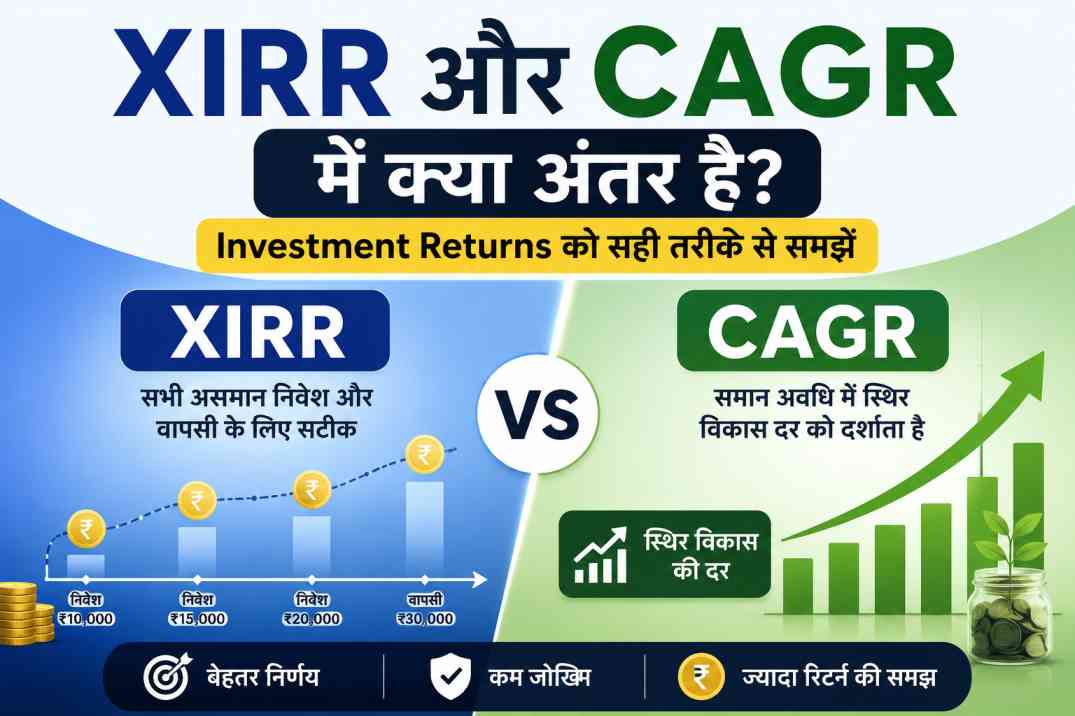
जब भी हम Mutual Fund, SIP, या किसी भी Investment की returns देखते हैं, तो दो terms बार-बार सामने आते हैं — CAGR और XIRR। बहुत से लोग इन्हें एक ही समझ लेते हैं, लेकिन ये दोनों अलग-अलग हैं और अलग-अलग situations में उपयोग होते हैं।
इस article में हम बहुत आसान भाषा में समझेंगे कि CAGR और XIRR क्या होते हैं, इनमें क्या फर्क है, और आपको कब कौन-सा use करना चाहिए।
CAGR क्या होता है?
CAGR का पूरा नाम है — Compound Annual Growth Rate।
CAGR वह दर है जिस पर आपका investment हर साल एक समान गति से बढ़ता है, यदि शुरुआत से अंत तक एक ही निवेश हो।
सरल शब्दों में: मान लीजिए आपने ₹1,00,000 invest किए और 5 साल बाद वो ₹1,61,051 हो गए। तो CAGR होगा 10% प्रति वर्ष।
Formula:
CAGR = [(अंतिम राशि / प्रारंभिक राशि) ^ (1/वर्षों की संख्या)] – 1
CAGR का उदाहरण
| विवरण | राशि |
| प्रारंभिक Investment | ₹1,00,000 |
| अंतिम Value (5 साल बाद) | ₹1,61,051 |
| CAGR | 10% प्रति वर्ष |
CAGR कब use करें?
- जब आपने एक ही बार (Lump Sum) पैसा invest किया हो
- किसी Index जैसे Nifty 50, Sensex की performance देखनी हो
- किसी Stock की long-term growth compare करनी हो
- Mutual Fund के past performance को देखना हो
XIRR क्या होता है?
XIRR का पूरा नाम है — Extended Internal Rate of Return।
XIRR वह दर है जो अलग-अलग समय पर किए गए investments और withdrawals को ध्यान में रखकर actual return calculate करती है।
सरल शब्दों में: जब आप हर महीने SIP करते हैं, तो हर किस्त अलग-अलग समय पर invest होती है। XIRR इन सभी किस्तों की dates और amounts को मिलाकर आपका असली return बताता है।
XIRR का उदाहरण — SIP के साथ
| महीना | Investment | Date |
| Month 1 | ₹5,000 | 01-Jan-2023 |
| Month 2 | ₹5,000 | 01-Feb-2023 |
| Month 3 | ₹5,000 | 01-Mar-2023 |
| Month 4 | ₹5,000 | 01-Apr-2023 |
| Month 5 | ₹5,000 | 01-May-2023 |
| Month 6 | ₹5,000 | 01-Jun-2023 |
| Current Value (अंतिम) | -₹31,500 | 01-Jul-2023 |
यहाँ XIRR आपको बताएगा कि इन सभी अलग-अलग dates पर invest किए पैसों पर आपका actual annualized return क्या है।
XIRR कब use करें?
- जब आप SIP (Systematic Investment Plan) कर रहे हों
- जब अलग-अलग dates पर investment या withdrawal हुआ हो
- PPF, EPF जैसे schemes जहाँ irregular investments होते हैं
- जब आपने कभी-कभी extra पैसे डाले या निकाले हों
CAGR vs XIRR — एक नज़र में फर्क
| विशेषता | CAGR | XIRR |
| Full Form | Compound Annual Growth Rate | Extended Internal Rate of Return |
| Investment Type | Lump Sum (एकमुश्त) | SIP / Multiple Investments |
| Date Sensitivity | नहीं — सिर्फ Start और End date | हाँ — हर transaction की date |
| Accuracy | Simple investments के लिए सटीक | Complex investments के लिए सटीक |
| Calculation | आसान Formula | Complex (Excel/Software use होता है) |
| Best For | Index, Stocks, Funds (Lump Sum) | SIP, PPF, EPF returns |
सबसे आम गलती — और उसका जवाब
गलती: लोग SIP के returns देखने के लिए CAGR use करते हैं, जो गलत result देता है!
उदाहरण: अगर आपने 12 महीने SIP की और CAGR से return calculate किया, तो वो सही नहीं होगा। क्योंकि CAGR यह नहीं जानता कि हर किस्त कब डाली गई।
सही तरीका: SIP की returns हमेशा XIRR से calculate करें। Excel में =XIRR() function का use करें।
Excel में XIRR कैसे calculate करें?
- Column A में सभी investment dates डालें
- Column B में amounts डालें (investment के लिए negative, जैसे -5000)
- जब portfolio redeem करें, वो amount positive डालें
- फिर formula: =XIRR(B1:B13, A1:A13) लिखें
- Result को 100 से multiply करें — यही आपका XIRR% है
निष्कर्ष
अब आप समझ गए होंगे कि CAGR और XIRR दोनों अलग-अलग situations के लिए बने हैं:
- CAGR = एक बार investment, simple और fast calculation
- XIRR = बार-बार investment/withdrawal, accurate real-world return
- SIP के लिए हमेशा XIRR देखें — CAGR से गलत picture मिलती है
- Mutual Fund apps में जो return दिखता है, वो अक्सर XIRR होता है
याद रखें: दोनों terms आपके दोस्त हैं — बस सही जगह पर सही term का उपयोग करें!
यह article केवल educational purpose के लिए है। Investment से पहले अपने financial advisor से सलाह लें।
Read Also: 1 करोड़ रुपये का Retirement Corpus कितना समय चलेगा?
Read Also: Salary आते ही पैसे कहाँ-कहाँ Allocate करने चाहिए?
Read Also: NPS vs Mutual Funds: रिटायरमेंट फंड बनाने के लिए क्या है बेहतर?

नमस्कार दोस्तों, मेरा नाम वरुण सिंह है, मैं अपने खाली समय में Youtube Channel पर फाइनेंस संबंधी वीडियो अपलोड करता हूं साथ ही ब्लॉगिंग भी कर रहा हूं। हमारी कोशिश है की हम अपने पाठकों के लिए फाइनेंस सम्बंधित विषयों पर उच्च गुणवत्ता से युक्त आर्टिकल प्रकाशित करें।