
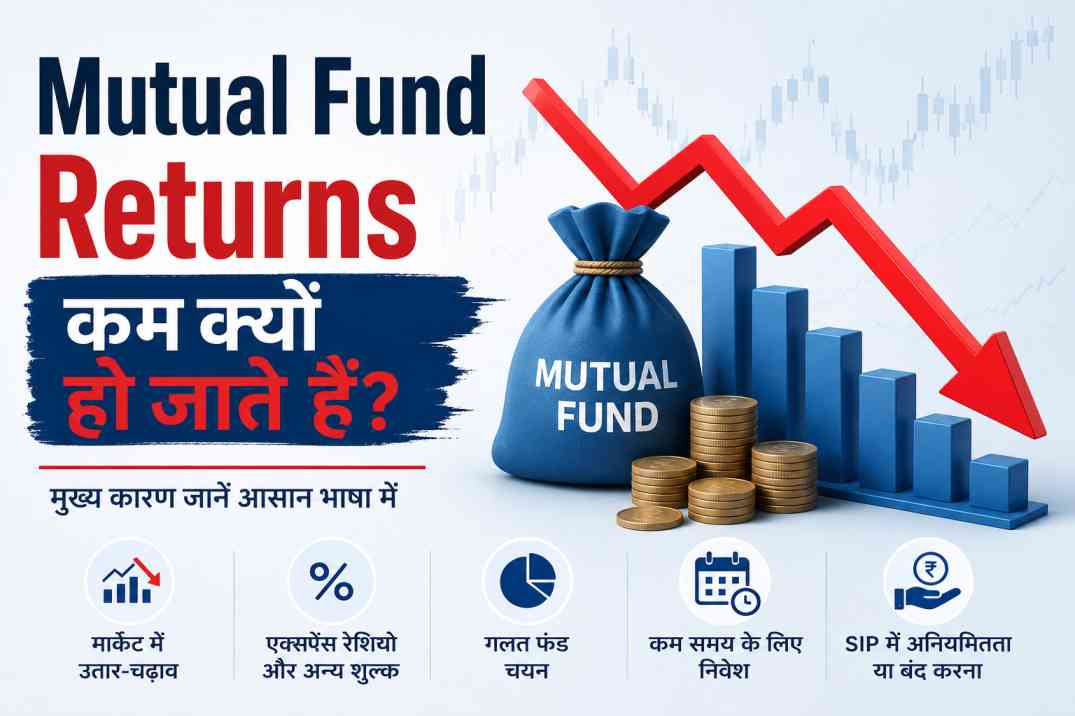
“Fund 14% return दे रहा है — लेकिन मुझे सिर्फ 8% मिल रहा है। 6% कहाँ गया?”
यह India के लाखों mutual fund investors का सबसे common frustration है। Fund का advertised return और investor का actual return के बीच एक बड़ा gap होता है।
इस gap को समझना — और इसे minimize करना — यही smart investing का core है।
The Return Journey — 14% से 8% तक का सफर
मान लीजिए एक equity mutual fund ने साल में 14% gross return दिया।
लेकिन आपके हाथ में कितना आया? देखते हैं:
Step 1 — Expense Ratio कट गई: Regular Plan में average 2% expense ratio। 14% – 2% = 12% net।
Step 2 — Tax कटा: 12% return पर LTCG (12.5%)। Tax impact approximately 1.5%। 12% – 1.5% = 10.5% after-tax।
Step 3 — Inflation खा गई: 6% inflation। 10.5% – 6% = 4.5% real return।
Step 4 — Behavioral mistakes: Panic selling, fund switching, SIP pause — ये further 1-2% कम करते हैं।
Final real return: 4-5%।
14% advertised। 4-5% actual। यही है return erosion।
Return Killer #1 — Expense Ratio: सबसे Powerful Silent Drain
यह सबसे important, सबसे common, और सबसे fixable return killer है।
Regular Plan का Crime
जब आप bank branch, insurance agent, या distributor से mutual fund खरीदते हैं — वो आपको Regular Plan देता है। इसमें distributor commission होती है जो expense ratio में जुड़ती है।
Regular Plan expense ratio: 1.5-2.5%। Direct Plan expense ratio: 0.1-1.0%। ETF expense ratio: 0.02-0.10%।
यह difference छोटा लगता है। Compound interest की वजह से यह devastating होता है।
₹10,000 मासिक SIP, 14% gross return, 20 साल:
ETF (0.05% expense): ₹1.34 करोड़। Index Fund Direct (0.10%): ₹1.33 करोड़। Active Fund Direct (1.0%): ₹1.17 करोड़। Regular Plan (2.0%): ₹1.02 करोड़।
Regular Plan investor ETF investor से ₹32 लाख पीछे। Same fund, same market, same period।
Expense Ratio क्या है?
Mutual fund आपके corpus का एक percentage annually लेता है — fund management, operations, marketing के लिए। यह daily NAV में reflect होता है। आपको separate payment नहीं करनी — यह automatically deduct होती है।
यही वजह है कि ज़्यादातर investors इसे notice नहीं करते। “Silent drain” बिल्कुल सही शब्द है।
Fix: Direct Plan और ETF
Direct Plan में expense ratio 1-1.5% कम होती है। MFCentral.in पर Regular से Direct Plan switch करें। भविष्य में हमेशा Groww, Zerodha Coin, या AMC website पर directly invest करें।
Long-term के लिए Index ETF prefer करें — 0.05% expense ratio सबसे कम है।
Return Killer #2 — Inflation: सबसे Underestimated Enemy
India में mutual fund के context में inflation की बात कम होती है। लेकिन यह returns का सबसे large single destroyer है।
6% annual inflation का मतलब है: आज ₹100 की जो चीज़ खरीद सकते हो, 12 साल बाद उसके लिए ₹200 चाहिए।
Nominal return vs Real return:
Equity MF 13% nominal – 6% inflation = 7% real। PPF 7.1% – 6% = 1.1% real। FD 7% – 6% = 1% real। Savings Account 3.5% – 6% = -2.5% real (wealth destroy हो रही है!)।
यही reason है कि equity mutual fund के अलावा कोई भी instrument long-term में real wealth नहीं बनाता।
FD “safe” लगती है। लेकिन 20 साल में FD आपकी purchasing power preserve भी नहीं करती।
Why Equity Wins Against Inflation
Equity companies real assets own करती हैं — factories, land, inventory। Inflation हो तो companies अपने prices बढ़ाती हैं। Earnings बढ़ती हैं। Stock price बढ़ती है।
Equity is the best inflation hedge available to retail investors।
Return Killer #3 — Tax: Planning से Minimize होता है
LTCG vs STCG — 1 साल का फर्क ₹लाखों का
Short Term Capital Gains (STCG): 1 साल से पहले बेचने पर। Rate: 20%।
Long Term Capital Gains (LTCG): 1 साल बाद बेचने पर। Rate: 12.5%। Bonus: ₹1.25 लाख तक annual LTCG tax-free।
एक example: ₹10 लाख में mutual fund buy किया। 11 महीने बाद ₹12 लाख में बेचा।
STCG case: ₹2 लाख gain पर 20% = ₹40,000 tax।
LTCG case (अगर 13 महीने wait किया): ₹2 लाख – ₹1.25 लाख = ₹75,000 taxable। 12.5% = ₹9,375 tax।
फर्क: ₹30,625 — सिर्फ 2 महीने ज़्यादा wait करने से।
LTCG Tax Harvesting — Smart Move
हर साल December-January में ₹1.25 लाख तक gain book करें और reinvest करें। यह tax-free step-up है जो most investors miss करते हैं।
Example: आपके fund में ₹1.25 लाख का gain है। Units redeem करें। वापस invest करें। Tax zero। आपकी cost basis reset हो गई — future में tax कम होगा।
Dividend Option का Trap
बहुत से investors dividend option choose करते हैं। Problem: Dividend आपके income में add होता है और slab rate पर tax लगता है।
30% bracket में dividend पर 30% tax। Growth option में LTCG 12.5%
Retirement में income की ज़रूरत है? SWP use करें — dividend option से far better
Return Killer #4 — Panic Selling: Behavioral Finance का Victim
यह return killer unique है — यह market नहीं, आप create करते हैं।
2020 COVID crash में Sensex 38% गिरा। जिन investors ने March 2020 में panic में बेचा — उन्होंने October 2020 तक की 80%+ recovery miss की।
Mathematical impact: ₹10 लाख का portfolio March 2020 में ₹6.2 लाख हुआ। Panic में बेचा। October 2020 में Sensex recover होने पर वापस आए — लेकिन तब ₹6.2 लाख से शुरू किया।
जो रुके थे — उनका corpus October 2020 में ₹10.5 लाख था।
Opportunity cost: ₹4.3 लाख — सिर्फ 7 महीने की patience की कमी से।
The “Behavior Gap” — Carl Richards का famous concept। Market का return और investor का actual return के बीच का gap mostly behavioral है। India में यह gap 3-5% annually estimate किया जाता है।
Return Killer #5 — Wrong Fund Category
यह “mismatch” problem है।
Short-term goal में equity:
3 साल में घर खरीदना है। Corpus Small Cap Fund में है। Market crash आया — Small Cap -50% गिरा। घर खरीदने का time आया, corpus आधा हो गया।
यह goal mismatch का classic case है।
Long-term goal में debt:
30 साल बाद retirement है। FD और PPF में invest कर रहे हैं। 7% nominal – 6% inflation = 1% real return। 30 साल में equity की तुलना में ₹2-3 करोड़ कम corpus।
Correct mapping:
0-3 साल: Liquid/Ultra Short Duration fund। 3-7 साल: Hybrid/Balanced fund। 7-15 साल: Large Cap/Nifty 50 ETF। 15+ साल: Nifty 500/Midcap allocation possible।
Return Killer #6 — Fund Switching का Churn
“पिछले साल यह fund top था, switch करते हैं।”
यह sounding strategy है लेकिन actually return destroyer है।
Switch का Hidden Cost:
Exit Load: 1 साल से पहले most equity funds में 1% exit load
STCG Tax: 1 साल से पहले बेचा तो 20% tax on gains
Compound Chain Break: नए fund में fresh start। पुराने compound का momentum lost
Recency Bias का Trap:
SPIVA data consistently दिखाता है — हर साल का top performer अगले साल average या below-average रहता है। Fund switching track करने वाले studies में consistent finding है: frequent switchers, buy-and-hold investors से 2-3% annually कम return पाते हैं।
Fix: 5-year commitment rule। Fund switch करें सिर्फ जब fundamental reason हो — fund manager change, strategy shift, या consistent 3+ साल underperformance
Return Killer #7 — No Step-Up SIP
यह technically return killer नहीं है — लेकिन real return को dramatically कम दिखाता है।
₹10,000 flat SIP 20 साल में: ₹99.9 लाख।
लेकिन inflation की वजह से ₹10,000 की आज की value 20 साल बाद सिर्फ ₹3,200 जैसी होगी (6% inflation पर)।
Real terms में आपकी SIP actually हर साल “छोटी” होती जा रही है।
Step-Up SIP से इसे fix करें। 10% annual step-up से 20yr corpus: ₹2.07 करोड़। Inflation-adjusted real growth।
Return Killer #8 — Wrong Redemption Timing
यह tax planning की कमी है।
Financial year के आखिर (March) में redeem करना — जब पहले से ₹1.25 लाख LTCG हो चुकी हो — extra tax देना होगा।
Smart approach: LTCG ₹1.25 लाख से ज़्यादा न हो एक financial year में — or plan करके April-May में redeem करें ताकि नया tax year हो।
Goal-based redemption: Lump sum की बजाय SWP से withdraw करें — tax liability spread होती है।
Return Maximization Framework
इन सभी return killers को address करने का formula:
Direct Plan/ETF → Maximum Gross Retention। Long Term Hold (1 year+) → LTCG vs STCG benefit। Annual Tax Harvesting → ₹1.25L free LTCG use करें। Step-Up SIP → Inflation को beat करें। Goal-based Allocation → Wrong category से बचें। No panic selling → Behavioral discipline। No unnecessary switching → Compound power preserve।
इन 7 habits को follow करने वाला investor, same market में same fund से 3-5% annual extra return effectively पाता है।
Real Numbers — Perfect Investor vs Average Investor
₹10,000 मासिक SIP, 20 साल, 14% gross:
Perfect investor (all habits right): Direct ETF, no panic, step-up 10%, LTCG harvest, right fund: ₹2+ करोड़।
Average investor (common mistakes): Regular plan, 2 panic sells, no step-up, wrong fund: ₹85-90 लाख।
Gap: ₹1.1-1.15 करोड़। Same market। Same period। Same initial amount।
Difference: Habits और knowledge।
निष्कर्ष
Mutual fund returns कम नहीं होते — आप उन्हें कम करते हैं।
Market का 14% return जो आपको 5-8% मिल रहा है — वो gap आपने बनाया है। Regular Plan, panic selling, wrong category, no step-up — इन सबने मिलकर यह gap create किया।
Good news यह है: यह सब fixable है। Direct Plan switch — आज कर सकते हैं। Step-up SIP — एक click में। Tax harvesting — साल में एक बार।
Mutual fund returns कम नहीं होंगे — अगर आप इन return killers को identify करके eliminate करें।
“An investor’s returns are not determined by what the market does — they’re determined by what the investor does.”
Disclaimer: यह article केवल educational purpose के लिए है। Returns historical assumptions पर आधारित हैं। Tax rules बदल सकते हैं। Individual situations vary करती हैं। निवेश से पहले SEBI registered financial advisor और CA से सलाह लें।
Read Also: Fund House बंद हो जाए तो निवेशकों का क्या होगा?
Read Also: NPS vs PPF vs Mutual Fund: Retirement के लिए कौन बेहतर?
Read Also: SWP क्या है और Retirement में कैसे काम आता है?

नमस्कार दोस्तों, मेरा नाम वरुण सिंह है, मैं अपने खाली समय में Youtube Channel पर फाइनेंस संबंधी वीडियो अपलोड करता हूं साथ ही ब्लॉगिंग भी कर रहा हूं। हमारी कोशिश है की हम अपने पाठकों के लिए फाइनेंस सम्बंधित विषयों पर उच्च गुणवत्ता से युक्त आर्टिकल प्रकाशित करें।