
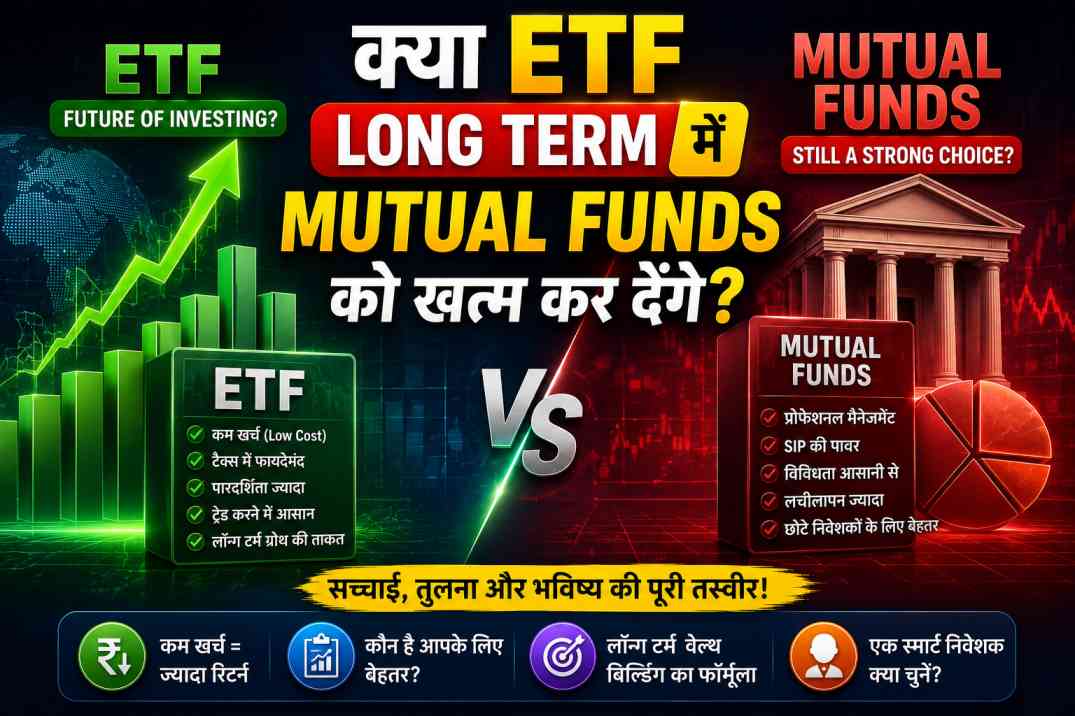
2024 में एक historic moment आया जो India के financial media में ज़्यादा cover नहीं हुआ। अमेरिका में पहली बार passive funds (ETF + Index Funds) का total AUM, active mutual funds के AUM से ज़्यादा हो गया। $26 trillion passive vs $17 trillion active।
यह 20 साल की journey थी। 2010 में passive funds का share सिर्फ 15% था। 2024 में 60% से ज़्यादा।
क्या India में भी यही होगा? क्या आने वाले 10-15 साल में ETF, active mutual funds को replace कर देंगे?
जवाब है — partially हाँ, लेकिन पूरी तरह नहीं। और यह क्यों है, इसे समझना हर Indian investor के लिए ज़रूरी है।
पहले Numbers — India में ETF कहाँ है आज?
India का ETF ecosystem अभी तेज़ी से grow कर रहा है लेकिन active mutual funds से बहुत पीछे है।
2025 में India का ETF AUM लगभग ₹9.5 लाख करोड़ है। Active Mutual Fund industry का AUM ₹53 लाख करोड़ से ज़्यादा है। ETF का market share 15% के आसपास है।
लेकिन growth rate देखें तो picture अलग है। 2018 में ETF AUM सिर्फ ₹1 लाख करोड़ था। 7 साल में 9.5 गुना growth। उसी period में active MF industry 3-3.5 गुना बढ़ी।
ETF faster grow कर रहा है — लेकिन base बहुत छोटा है।
US का Lesson — 20 साल में क्या हुआ?
US की story India के future का सबसे relevant template है।
2004 में John Bogle (Vanguard founder, Index Investing के godfather) ने predict किया था कि passive funds एक दिन active को beat करेंगे। बहुत लोगों ने उन्हें dismiss किया था।
2010 में US में passive funds का AUM $2 trillion था, active का $11 trillion था। Ratio था 1:5.5
2024 में passive $26 trillion, active $17 trillion। Passive ने active को cross कर लिया।
यह shift कैसे हुआ? तीन forces ने मिलकर काम किया। पहली force थी SPIVA data — जो हर साल prove करती थी कि 80%+ active managers अपने benchmark को beat नहीं कर पाते। दूसरी force थी digital platforms — Robinhood, Fidelity, Schwab — जिन्होंने ETF investing को zero-commission बना दिया। तीसरी force थी institutional investors — pension funds, endowments — जो passive की तरफ shift होते गए।
India में यही तीनों forces अभी build हो रही हैं।
India में ETF Revolution की 4 Driving Forces
1. EPFO — सबसे बड़ा Systematic Buyer
India का ETF revolution retail investors से नहीं, EPFO (Employees’ Provident Fund Organisation) से शुरू हुआ।
2015 में EPFO ने अपने corpus का एक हिस्सा ETF में invest करना शुरू किया। 2025 तक EPFO का ETF investment ₹2.5-3 लाख करोड़ से ज़्यादा है। यह हर महीने systematic खरीदारी है — बाज़ार ऊपर हो या नीचे।
इस institutional buying ने दो काम किए। Nifty 50 और Nifty Next 50 ETF को genuine depth और liquidity दी। और ETF को “serious investment” की legitimacy दी।
NPS (National Pension System) भी passive index funds में invest करता है। Government employees की हर महीने की saving automatically index में जाती है।
यह structural, policy-driven demand है — यह रुकने वाली नहीं है।
2. Digital Platforms — Democratization of ETF
Zerodha, Groww, Upstox, Paytm Money — इन platforms ने ETF investing को common man तक पहुँचाया।
2018 में ETF खरीदने के लिए broker account, demat, और technical knowledge चाहिए था। 2025 में Groww पर 2 मिनट में ₹100 का Nifty 50 Index Fund (ETF equivalent) SIP start हो जाती है।
Demat accounts 2019 में 3.5 crore थे, 2025 में 17 crore से ज़्यादा हैं। यह 5x growth है — और इनमें से बड़ी संख्या ETF और Index Fund investors की है।
3. Financial Literacy की New Wave
YouTube channels, Instagram influencers, और personal finance podcasts ने India में financial literacy का explosion किया है। Pranjal Kamra, Akshat Shrivastava, और सैकड़ों creators ने ETF के benefits को millions तक पहुँचाया।
“Low cost investing,” “expense ratio kills returns,” “passive beats active” — ये concepts अब mainstream हो रहे हैं।
Gen Z investors — जो अभी working age में आ रहे हैं — पहले से ETF-first mindset के साथ invest कर रहे हैं।
4. SPIVA India Data — Active Fund का सच सामने आना
SPIVA India report की findings India में भी active management की limitations expose कर रही हैं। Large cap category में 10 साल में 80%+ active funds ने अपने benchmark को underperform किया।
जब यह data mainstream investor तक पहुँचता है — और यह पहुँच रहा है — तो naturally Index ETF की तरफ shift होता है।
Active Mutual Funds क्यों खत्म नहीं होंगे?
यह बहुत important question है। ETF की growth impressive है — लेकिन active mutual funds की death की कहानी premature है। कई strong reasons हैं।
Small और Mid Cap में Alpha Real है
Large cap में India की top 50 companies को सब analysts closely follow करते हैं। Information efficient है। यहाँ active manager को edge मिलना मुश्किल है।
लेकिन Nifty Midcap 150 की companies में, और especially Small Cap में, information asymmetry है। एक talented fund manager जो small companies को deeply research करे, market से consistently आगे रह सकता है।
SBI Small Cap Fund, Nippon India Small Cap Fund — इन्होंने लंबे समय में index को significantly outperform किया है। यह alpha real है।
Active management का future large cap में कमज़ोर होगा, लेकिन mid/small cap में relevant रहेगा।
Hybrid, Debt, और Multi-Asset Products
Pure equity ETF के लिए passive works. लेकिन Balanced Advantage Funds (BAF), Multi-Asset Allocation Funds, Dynamic Bond Funds — इनका ETF equivalent नहीं है।
जब market high हो तो equity कम करना और debt बढ़ाना — यह judgment call है जो active managers करते हैं। इसे index track नहीं कर सकता।
Debt mutual funds में credit selection, duration management, और yield curve positioning — ये skills ETF replace नहीं कर सकता।
Distributor Network और Reach
India में financial distribution का 90% still distributors और IFAs (Independent Financial Advisors) के through होता है। ये लोग Regular Plan commission पर काम करते हैं — जो ETF में नहीं मिलती।
जब तक India का distribution model fundamentally नहीं बदलता — जो 10-15 साल की journey है — active mutual funds का dominant market share बना रहेगा।
Bharat में — Tier 2, Tier 3 cities में — जहाँ digital penetration कम है और trust-based relationships important हैं, distributors की भूमिका बड़ी है।
SIP Convenience
Active Mutual Fund में SIP, ETF से आसान है। Auto-debit, rupee-cost averaging, और no demat account needed — यह convenience नए investors के लिए important है।
ETF में technically daily/monthly buying आसान है लेकिन actual automation अभी भी mutual fund SIP जितनी seamless नहीं है।
ELSS Tax Benefit
₹1.5 लाख तक Section 80C deduction — यह सिर्फ ELSS (Equity Linked Savings Scheme) Mutual Funds में मिलती है। ETF में 80C benefit नहीं है।
जब तक ELSS exist करता है, tax-conscious investors के लिए active equity fund लेने का reason है।
US vs India — क्यों India की Journey अलग होगी?
US में passive revolution 20 साल में हुई। India में यह shift होगी लेकिन slower होगी। क्यों?
भारत की investment culture अभी relatively young है। Average Indian investor के पास financial literacy अभी build हो रही है। Active fund की “outperformance” narrative अभी भी powerful है क्योंकि real data तक access कम है।
Distribution ecosystem में बदलाव slow है। SEBI ने Direct Plan mandatory नहीं किया — distributors अभी भी Regular Plan promote कर सकते हैं।
Small और mid cap की large size और growth potential India-specific factor है। US में large cap ही dominant था — India में mid/small cap का relative size और performance gap ज़्यादा है।
2030 का Projected Picture
अगर current trends continue करें, तो 2030 में India का picture कुछ ऐसा होगा।
ETF AUM ₹35-45 लाख करोड़ तक पहुँचेगा। Market share 30-35% हो जाएगा। Active MF industry भी grow करेगी — ₹80-90 लाख करोड़ तक। लेकिन growth slower होगी।
Large cap active funds सबसे ज़्यादा shrink होंगे — ETF और Index Funds इन्हें replace करेंगे। Small/Mid cap और hybrid active funds relevant बने रहेंगे।
Institutional investors (EPFO, NPS, insurance companies) ETF में dominant होंगे। Retail space में दोनों coexist करेंगे — ETF/Index fund बढ़ेगा लेकिन active पूरी तरह नहीं जाएगा।
Investor के लिए Practical Takeaway
यह debate academic interest के अलावा आपके portfolio के लिए practical lesson भी देती है।
Large cap में passive (ETF/Index Fund) चुनें। Data clear है — 80%+ active large cap funds 10 साल में index से पीछे रहे हैं। यहाँ expense ratio बचाना ही alpha है।
Mid/small cap में proven active fund manager से डरें नहीं। अगर किसी fund ने 10+ साल में consistently benchmark से 2-3% ज़्यादा दिया है, तो उसका expense ratio justify होता है।
Hybrid और multi-asset के लिए active management अभी भी rational choice है।
Core-Satellite strategy follow करें। 60-70% passive ETF/Index Fund और 20-30% proven active funds। यही 2025 का smart approach है।
Regular Plan avoid करें। अगर active fund लेते हैं तो हमेशा Direct Plan — expense ratio 0.5-1% कम होता है जो 20 साल में लाखों का फर्क बनाता है।
निष्कर्ष — Coexistence, न Competition
यह दो philosophies की लड़ाई नहीं है। ETF और Active Mutual Fund दो अलग tools हैं — जैसे hammer और screwdriver, दोनों की अलग जगह है।
ETF ने India में investing को democratize किया है। ₹100 से Nifty 50 में invest करना अब possible है। EPFO के through करोड़ों workers passive equity में participate कर रहे हैं। यह revolution है।
लेकिन active management भी completely irrelevant नहीं होगी। जहाँ markets less efficient हैं, जहाँ alpha possible है, जहाँ complex risk management चाहिए — वहाँ skilled fund managers value add करते रहेंगे।
US ने यह journey 20 साल में की। India शायद 15 साल में करे। लेकिन end state “coexistence” होगा, “replacement” नहीं।
आपके लिए message simple है: ETF को आज ही अपने portfolio का core बनाएं। Active funds को satellite रखें। Expense ratio को seriously लें। और जो भी choose करें — SIP discipline बनाए रखें।
“The active vs passive debate will never be fully resolved — because both sides are partially right. The real question is: which tool for which job?” — Unknown
Disclaimer: यह article केवल educational purpose के लिए है। AUM projections estimates हैं जो actual results से differ कर सकते हैं। ETF और Mutual Fund investments market risk के अधीन हैं। US data approximate है और multiple sources पर आधारित है। निवेश से पहले SEBI registered financial advisor से सलाह लें।
Read Also: 2026 में कौन से Sectors सबसे ज़्यादा Grow कर सकते हैं?
Read Also: ₹100 Daily SIP Best ETF Strategy — सम्पूर्ण गाइड
Read Also: AI Stocks ETF vs IT ETF — कौन बेहतर है?

नमस्कार दोस्तों, मेरा नाम वरुण सिंह है, मैं अपने खाली समय में Youtube Channel पर फाइनेंस संबंधी वीडियो अपलोड करता हूं साथ ही ब्लॉगिंग भी कर रहा हूं। हमारी कोशिश है की हम अपने पाठकों के लिए फाइनेंस सम्बंधित विषयों पर उच्च गुणवत्ता से युक्त आर्टिकल प्रकाशित करें।