
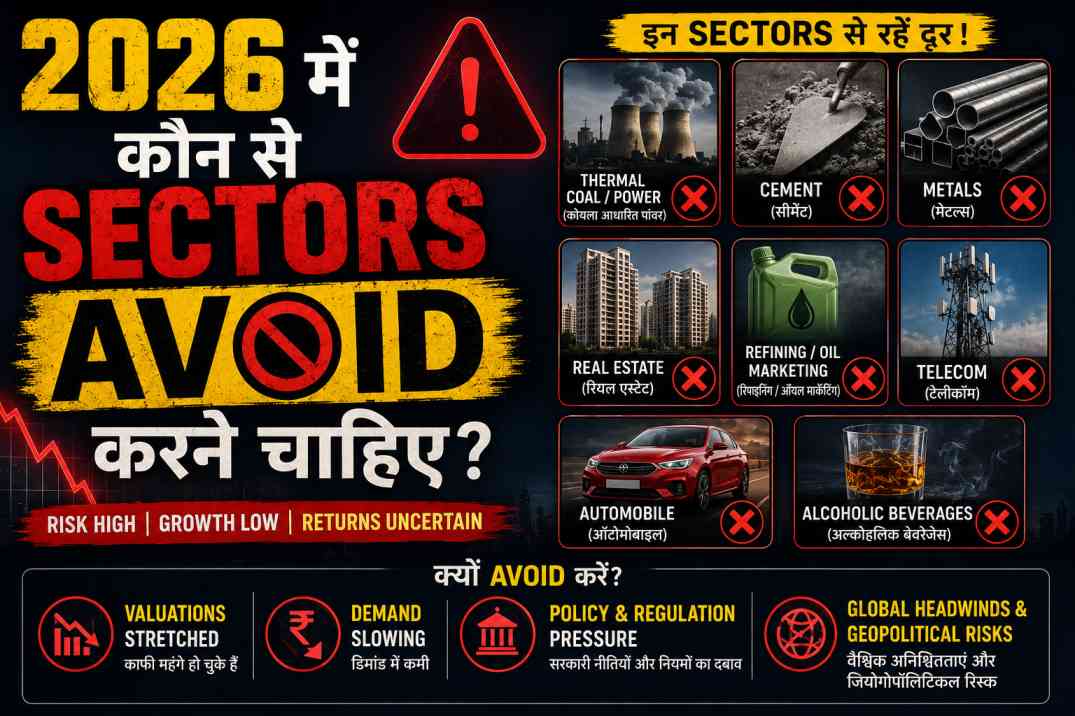
हर साल कुछ sectors उड़ते हैं और कुछ पिछड़ते हैं। 2025 में Defence और Manufacturing ने शानदार performance दी। लेकिन 2026 में कुछ sectors ऐसे हैं जिनमें structural headwinds इतने strong हैं कि overweight रहना risky हो सकता है।
यह article उन sectors को identify करता है जिन्हें 2026 में avoid या underweight रखना समझदारी है — और क्यों।
Important disclaimer पहले: “Avoid” का मतलब zero allocation नहीं है। अगर आप Nifty 50 या Nifty 500 ETF में invest करते हैं, तो इन sectors में natural exposure रहेगी। “Avoid” का मतलब है — इन sectors को overweight मत करें, dedicated sector ETF मत लें, और अगर heavy exposure है तो gradually reduce करें।
Sector #1 — PSU Banks: सबसे बड़ा Avoid
PSU Banks (State Bank, Punjab National Bank, Bank of Baroda, Canara Bank etc.) 2026 में significant headwinds face करेंगे।
कारण 1 — Rate Cut से NIM Compression
RBI 2025-26 में rate cut cycle में है। जब interest rates गिरती हैं, banks की Net Interest Margin (NIM) compress होती है। PSU Banks की NIM already private banks से कम है। Rate cuts इसे और compress करेंगे।
Private banks के पास better technology, lower cost of operations, और stronger liability franchise है — इसलिए वे NIM pressure को better manage करते हैं। PSU Banks इस pressure में ज़्यादा vulnerable हैं।
कारण 2 — NPA Problem अभी भी Unresolved
यह सोचना गलत होगा कि PSU Banks की NPA problem completely solve हो गई है। Agriculture loan waivers, MSME stress, और infrastructure project delays — इनसे NPAs 2026 में फिर बढ़ सकते हैं।
Private banks की underwriting quality PSU banks से consistently better रही है। Credit cost PSU banks का higher है।
कारण 3 — Government Interference
PSU banks को government directives follow करने होते हैं — priority sector lending, schemes का implementation, और political considerations। यह commercial banking से trade-off है।
कारण 4 — Valuation Already Expensive
2024 में PSU banks का re-rating हुआ था। Many PSU bank stocks अपने book value से 1.5-2x पर trade हो रहे हैं — जो historically PSU banks के लिए expensive है।
Alternative: Private bank heavy ETFs या Nifty Private Bank Index exposure ज़्यादा reasonable है।
Sector #2 — Traditional IT Services: AI Disruption का खतरा
यह सबसे controversial avoid recommendation है। TCS, Infosys, Wipro — India के blue-chip IT companies।
लेकिन 2026 में traditional IT services का business model structural pressure में है।
AI Automation का Direct Threat
Traditional IT का बड़ा revenue stream है — software testing, basic coding, BPO, and routine IT operations। AI tools जैसे GitHub Copilot, Claude, और GPT-4 ने coding productivity 40-60% बढ़ा दी है।
जहाँ 100 engineers लगते थे, वहाँ 50-60 से काम हो रहा है। यह directly headcount-based revenue model को challenge करता है।
US Client Spending Pressure
India IT की 60-70% revenue US clients से आती है। 2026 में US में potential recession या slowdown का risk है। IT spending first category है जो clients cut करते हैं।
Margin Compression
AI tools license करने की cost, upskilling cost, और competition — सब मिलकर IT margins को compress कर रहे हैं।
यह blanket IT avoid नहीं है। Mid-cap IT जो AI-native services offer कर रहे हैं — Persistent Systems, Mphasis, Coforge — उनकी story अलग है। वे AI से benefit ले रहे हैं।
Traditional large IT (commodity services) — यहाँ overweight होने से बचें।
Sector #3 — Residential Real Estate: Valuation Bubble Risk
India का residential real estate 2022-2025 में massive rally का शिकार रहा है। Mumbai, Delhi, Bangalore में property prices historically high हैं।
Affordability Crisis
Price-to-Income ratio India के top cities में 10-15x है। Global norm 4-6x है। यानी average Mumbai family को घर खरीदने के लिए 10-15 साल की पूरी income चाहिए — जो खर्च नहीं हुई हो।
यह affordability gap sustainable नहीं है।
Unsold Inventory
Top 8 cities में 7-8 lakh units unsold हैं। यह 2-3 साल की supply है। New launches continue हो रही हैं। Demand उस हिसाब से नहीं है।
Interest Rate Sensitivity
अगर global rates high रहें और RBI rate cuts limited हों — EMIs high रहेंगी और buyers बाज़ार से दूर रहेंगे।
Developer Risk
RERA के बाद better हुआ है लेकिन project delays, builder insolvencies का risk अभी भी है।
Alternative: REITs (Real Estate Investment Trusts) ज़्यादा safer और liquid exposure देते हैं। Embassy REIT, Mindspace REIT — ये commercial real estate (offices) में हैं जहाँ fundamentals better हैं।
Sector #4 — Telecom: High Debt, Slow ARPU Growth
India का telecom sector एक oligopoly बन गया है — Jio, Airtel, Vodafone-Idea। यह good news थी। लेकिन 2026 में telecom सेक्टर में कई challenges हैं।
5G rollout के लिए massive capex लगा है। Debt levels high हैं। ARPU (Average Revenue Per User) ₹200-210 पर है — जो profitability के लिए ₹250+ चाहिए।
Vodafone-Idea की survival uncertainty से industry dynamics uncertain हैं।
Jio और Airtel individually reasonable companies हैं लेकिन as a sector ETF play — return potential limited है और debt risk है।
Sector #5 — Metals & Mining: China Dependency का रिस्क
India का metals sector — Steel, Aluminum, Copper — China की economic health पर heavily dependent है। China India का biggest steel export competitor और commodity demand driver है।
2026 में China की economy sluggish रहने का risk है। Real estate crisis, youth unemployment, और consumer confidence weak — ये सब commodity demand को hit करेंगे।
Global steel overcapacity बढ़ रही है — new capacity Europe, Middle East, और Southeast Asia में आ रही है।
Cyclical sector में timing crucial है — और 2026 में metals cycle downward pressure में है।
Exception: Defence metals और specialty alloys — जो aerospace और defence के लिए हैं — यह अलग story है।
Sector #6 — Paints & Cement: Competition + Slowdown
Paints sector में एक major disruption हो रही है। Grasim Industries (Aditya Birla Group) ने paints market में entry की है। यह Berger, Asian Paints, Indigo के margins को compress करेगा।
Asian Paints — जो historically premium valuation पर trade होती थी — competitive pressure में है।
Cement sector residential real estate slowdown से directly impact होगा। New capacity आ रही है जबकि demand growth moderate है। Oversupply risk real है।
Sectors जो “Watch Carefully” List पर हैं
Small Cap Basket
Small cap ETF और small cap mutual funds में valuations stretched हैं। Average PE ratio 35-40x है जो long-term average से 30-40% premium पर है।
यह “avoid” नहीं है — लेकिन 2026 में small cap में lumpsum invest करना risky है। SIP जारी रख सकते हैं — DCA से valuation risk reduce होती है।
अगर market -15 to -20% गिरे तो small cap में extra invest करें। But at current levels, overweight होना risky है।
Media & Entertainment
Traditional media — print, broadcast TV — structural decline में है। OTT platforms ने viewership और advertising shift कर ली है।
Digital-first media companies better positioned हैं। लेकिन as a sector, Media & Entertainment 2026 में challenging रहेगा।
Sector Rotation की Strategy — 2026
Smart investors 2026 में जो sectors avoid कर रहे हैं, उनसे जो sectors buy कर रहे हैं उनमें rotate कर रहे हैं।
From PSU Banks → To Private Banks, NBFCs। HDFC Bank, ICICI Bank जैसे private banks better positioned हैं। Bajaj Finance, Cholamandalam जैसे NBFCs consumer credit में growing हैं।
From Traditional IT → To AI-native Mid IT। Persistent Systems, Coforge, KPIT Technologies — ये AI services में genuinely growing हैं।
From Residential Real Estate → To REITs + Infrastructure। Commercial real estate का exposure REITs से लें। Physical residential property investment second property के रूप में avoid करें।
From Metals → To Manufacturing ETF। China-dependent commodity metals से हटकर India-domestic manufacturing में जाएं।
Nifty 500 ETF — Natural Hedge
अगर आप sector calls लेने से बचना चाहते हैं — जो most investors के लिए सही है — तो Nifty 500 ETF सबसे smart play है।
Nifty 500 naturally market-cap weighted है। जो sectors underperform करेंगे, उनका weight automatically कम होगा। जो outperform करेंगे, उनका weight बढ़ेगा।
आपको कोई active decision नहीं लेनी। Sector rotation automatic है।
यही reason है कि long-term investors के लिए broad index > sector bets
एक Important Caveat — Predictions के बारे में
यह याद रखना ज़रूरी है कि sector predictions imperfect हैं।
2022 में कोई नहीं जानता था कि 2023-24 में PSU stocks इतना outperform करेंगे। 2019 में Defence stocks को किसी ने इतना bullish नहीं माना था।
“Avoid” recommendations historical trends और structural analysis पर आधारित हैं — लेकिन market surprise देता है। Policy change, global event, या unexpected earnings growth कभी भी equation बदल सकती है।
इसीलिए sector ETFs को portfolio का satellite रखें — 10-15% से ज़्यादा नहीं। Core हमेशा Nifty 50 या Nifty 500 ETF रहे।
2026 का Portfolio Blueprint
Core (60-70%): Nifty 500 ETF + Nifty 50 ETF। यह automatically good sectors को overweight और bad sectors को underweight करता है।
Satellite — Buy (20-25%): Defence ETF 8-10%, Manufacturing ETF 8-10%, Green Energy 5%, Nasdaq 100 5%।
Defensive (10-15%): Gold ETF 10%, Bharat Bond ETF 5%
Avoid or Minimize: PSU Bank heavy ETFs, Traditional IT sector ETFs, Small Cap lumpsum, Residential Real Estate ETF
निष्कर्ष
2026 में smart investing का मतलब है — tailwinds में sail करना और headwinds से बचना।
PSU Banks, traditional IT services, residential real estate, metals — इन sectors में structural challenges हैं जो 2026 में performance को limit करेंगे।
लेकिन इन sectors को avoid करने से ज़्यादा ज़रूरी है — अच्छे sectors में disciplined तरीके से invest करते रहना।
SIP continue करना, broad index ETF में core रखना, और concentrated sector bets से बचना — यही 2026 की winning strategy है।
Market timing करना और perfect sector rotation करना retail investors के लिए practical नहीं है। But awareness रखना — कि कहाँ risk है — यह ज़रूर possible है।
“Investing is not about avoiding all risks — it’s about taking the right risks at the right price.” — Howard Marks
2026 में सही risks लें — avoid sectors में नहीं, tailwind sectors में।
Disclaimer: यह article August 2025 cutoff तक के data पर आधारित है और purely educational purpose के लिए है। Sector predictions uncertain हैं और actual results vary कर सकते हैं। Market investments में substantial risk है। निवेश से पहले SEBI registered financial advisor से सलाह लें।
Read Also: ज़्यादातर लोग अमीर क्यों नहीं बनते | Why most people never become rich?
Read Also: HDFC Bank में गवर्नेंस प्रोब: ₹45 करोड़ विवाद से शेयर क्यों गिरा?

नमस्कार दोस्तों, मेरा नाम वरुण सिंह है, मैं अपने खाली समय में Youtube Channel पर फाइनेंस संबंधी वीडियो अपलोड करता हूं साथ ही ब्लॉगिंग भी कर रहा हूं। हमारी कोशिश है की हम अपने पाठकों के लिए फाइनेंस सम्बंधित विषयों पर उच्च गुणवत्ता से युक्त आर्टिकल प्रकाशित करें।